
Our Products
Thank you for your interest in our products!
Learn more below.

Product Sales
Organic Compost: $22.50 / ton
Top Soil: $30.00 / ton
Recycled Gypsum: $18.00 / ton Screened Woodchips: $5.00 / ton
All products based on availability

Donations
Northern Recycling is happy to donate to local schools and community gardens. Please reach out so we can learn more about your needs!
-
Currently, we only accept debit/credit cards from Visa and Mastercard. We apologize for any inconvenience.
-
Our compost is listed by the Organic Materials Review Institute (OMRI) for use in organic production, approved as an Organic Input Fertilizing Material by the California Department of Food and Agriculture (CDFA), and certified with the United States Composting Council’s Seal of Testing Assurance.
-
The final compost is tested according TMECC (Test Methods for the Examination of Composting and Compost) by a certified laboratory according to US Composting Council’s STA program. Compost quality is evaluated through an independent laboratory analysis for parameters such as carbon-to-nitrogen (C:N) ratio, organic matter content, salinity total nitrogen, total phosphorus, stability, phytotoxicity, pH, maturity, boron, chloride, sodium, particle sizes, heavy metal concentration, and pathogen concentrations and other parameters before it is provided to customers.
In addition, Compost that can be sold or otherwise provided to customers must meet California standard for every pile and to attain a temperature of 131 degree Fahrenheit (55 degree Celsius) or higher, and maintain that temperature for at least 3 days. -
Yes! Northern Recycling can deliver small, local deliveries. Complete the Product Inquiry form for more information on deliveries and a personalized quote.
Northern Recycling partners with Westside Spreading LLC to facilitate large-scale commercial sales within agricultural communities. Westside Spreading facilitates bulk compost orders, compost delivery and other agricultural services for both local and regional needs. To learn more, please complete the Product Inquiry Form or contact Westside Spreading directly at (530) 219-9981.
In addition, all products are available to pick up at the YCCL.
-
Please complete the Donation Inquiry Form above and let us know how much compost is needed for your school or community garden. We will get back to you and let you know what we can do to help you meet this goal!
-
Northern Recycling takes green waste (yard trimmings) and food waste from the region and runs it through a state of the art pre-processing line. This processing line remove contamination and reduces the size of material using a piece of equipment that shreds and grinds. The pre-processed material is loaded in the CASP facility for active composting and once complete is moved to curing. After approximately 60-80 days the product is screened to remove any large items (such as wood) and any contamination (such as a plastic bag) that made its way thought the initial processing. Learn more about the details of our process here!
-
Recycled gypsum is made onsite from crushed and screened wallboard. This differs from gypsum that is mined.
-
Top soil is a blend of native local soil and compost. This blend is approximately 50% native soil and 50% compost.
Yolo Co. Free Compost Giveaway
The Yolo County Central Landfill will offer free compost to all Yolo County residents!
Program Details:
WHO: Yolo County Residents (program not available to businesses or landscapers)
DATES: March 1 - May 31 2024! during business hours
WHAT TO BRING: shovel, bags, and proof of residency
LOCATION: 44090 County Road 28H, Woodland
Benefits
Northern’s Organic Compost: A Natural Choice
Compost use can result in a variety of environmental & economic benefits. The following are a few of the most important benefits:
Compost Naturally Enriches Soil
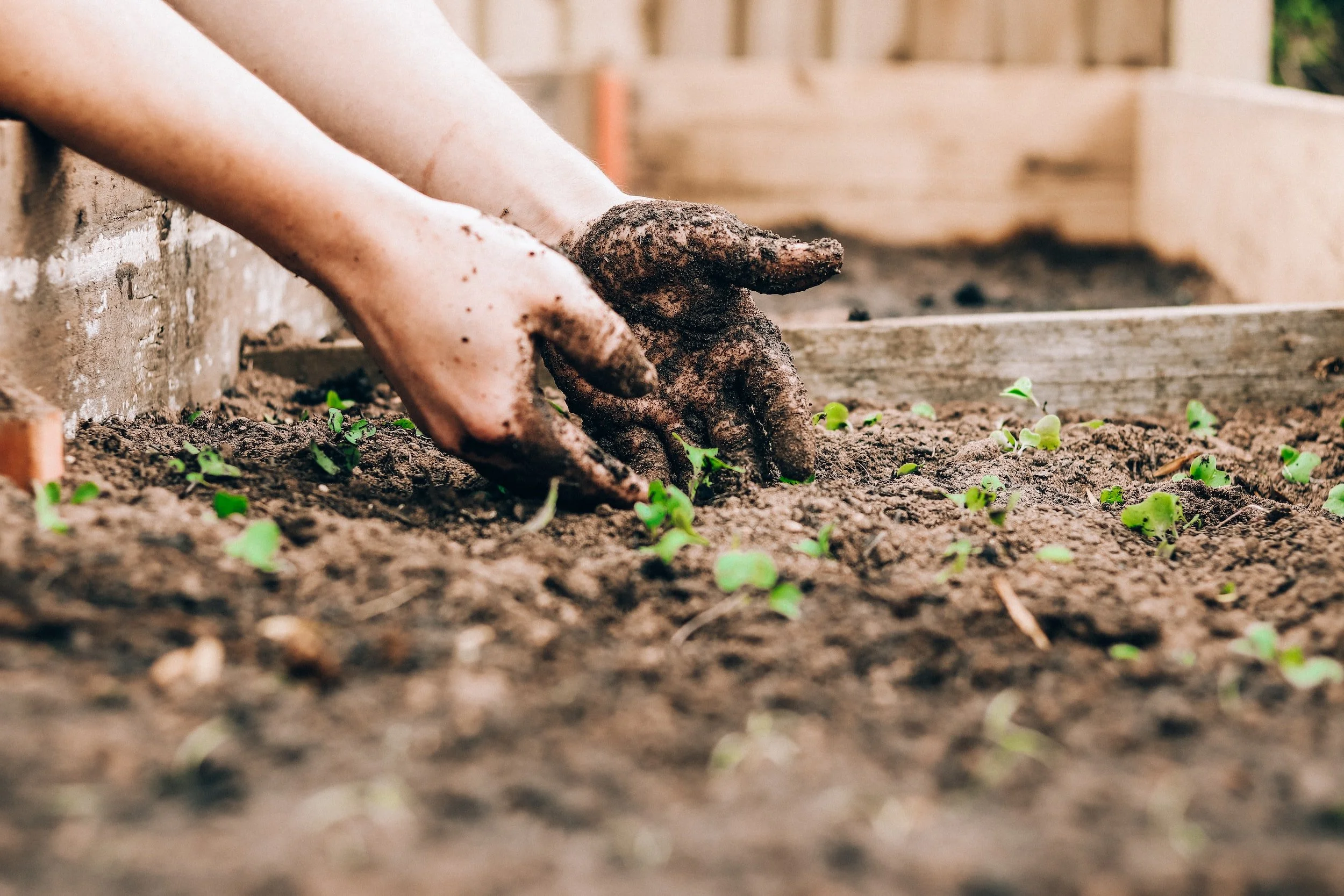
Compost has the ability to help regenerate poor soils. The composting process encourages the production of beneficial micro-organisms (mainly bacteria and fungi) which in turn break down organic matter to create humus. Humus – a rich nutrient-filled material – increases the nutrient content in soils. Compost has also been shown to suppress plant diseases and pests, reduce or eliminate the need for chemical fertilizers, and promote higher yields of agricultural crops.
Compost Aids in Moisture Retention
The addition of compost may also provide greater drought resistance and more efficient water utilization. Therefore, the frequency and intensity of irrigation may be reduced. Since compost can hold many times it own weight in moisture, its use can greatly assist the establishment of roadside plantings. Recent research also suggests that the addition of compost in sandy soils can facilitate moisture dispersion by allowing water to more readily move laterally from its point of application.
Compost Helps Prevent Pollution & Erosion
Composting organic materials that have been diverted from landfills ultimately avoids the production of methane and leachate formulation in the landfills, helping to fight global warming. Compost has the ability to prevent pollutants in stormwater runoff from reaching surface water resources. Compost has also been shown to prevent erosion and silting on embankments parallel to creeks, lakes, and rivers, and prevents erosion and turf loss on roadsides, hillsides, playing fields, and golf courses. In addition, compost overs can be used as a mulch to effectively control weeds.
Compost Helps Clean Up Contaminated Soil
The composting process has been shown to absorb odors and treat semi-volatile and volatile organic compounds (VOCs), including heating fuels, polyaromatic hydrocarbons (PAHs), and explosives. It has also been shown to bind heavy metals and prevent them from migrating to water resources or being absorbed by plants. The compost process degrades and, in some cases, completely eliminates wood preservatives, pesticides, and both chlorinated and non-chlorinated hydrocarbons in contaminated soils.
Compost Offers Economic Benefits
Using compost can reduce the need for water, fertilizers, and pesticides. It serves as a marketable commodity – bulk compost is a low-cost alternative to bagged and artificial soil amendments. Composting also extends municipal landfill life by diverting organic materials from landfills and provides a less costly alternative to conventional methods of remediating contaminated soil.
Compost Decreases GHG Emissions and Closes the Loop Locally
Composting significantly decreases greenhouse gas emissions. The nutrients from organic materials are sent back into the earth as natural soil enhancers instead of to a landfill, where they sit forever, giving off methane gas (a greenhouse gas at least 30 times as potent as carbon dioxide). Landfill operators claim to capture methane, but studies show that a significant percentage is still escaping into the atmosphere and heating the planet. Instead, the organic compost produced from yard waste and other organics is used at many local gardens, farms, and vineyards, decreasing the need for synthetic fertilizers, conserving water, saving unnecessary transportation energy, and closing the loop locally and sustainably.